Intraoral Scanner: Fast, Comfortable, and Accurate Scanning Experience with the Simplest System

Gone are the days when dentists used messy and uncomfortable goop-based impressions. Dr. Alireza Farkhondeh, Dr. Gang Wang, and Mr. Majid Ahangaran at The Hope Dental Care Centre in Kanata, Ontario, have replaced unpleasant dental impressions with digital scanning technology. When you book an appointment with our team, expect us to use a comfortable, wand-like intraoral scanner when impressions are required. No more biting into a tray of gooey dental material — digital impression scanners have elevated the scanning experience for dentists and patients to a whole new level.

What is an intraoral scanner?

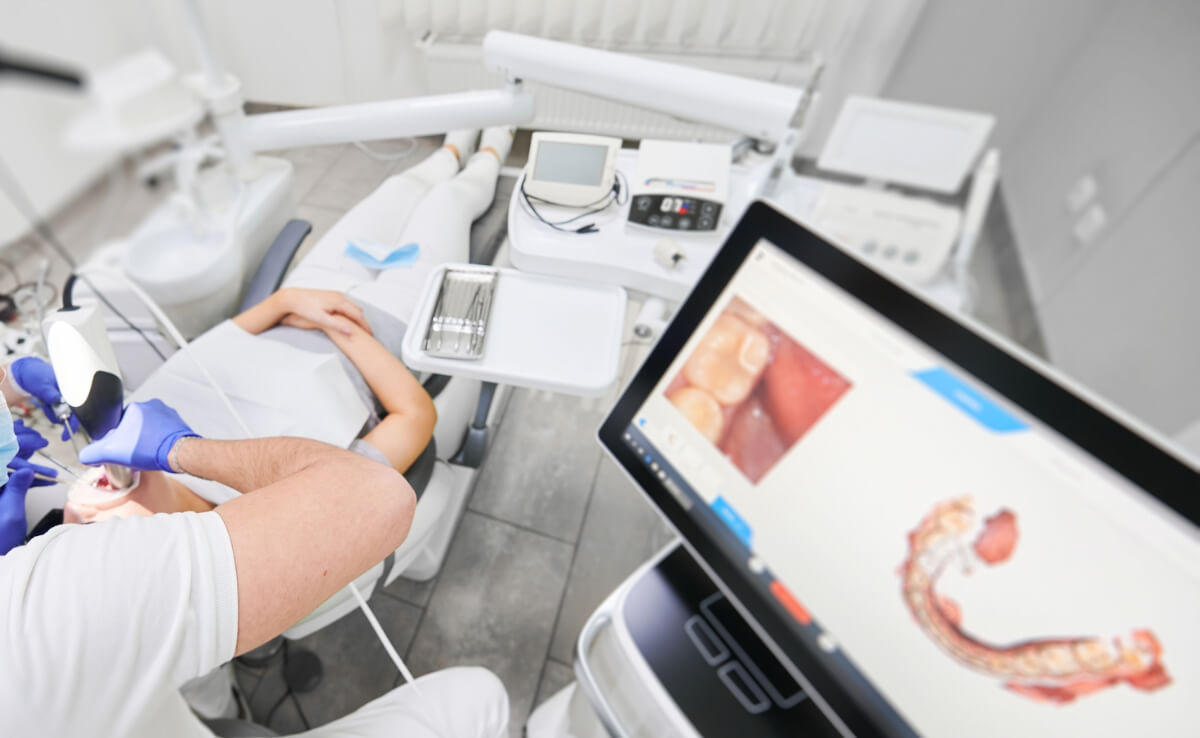
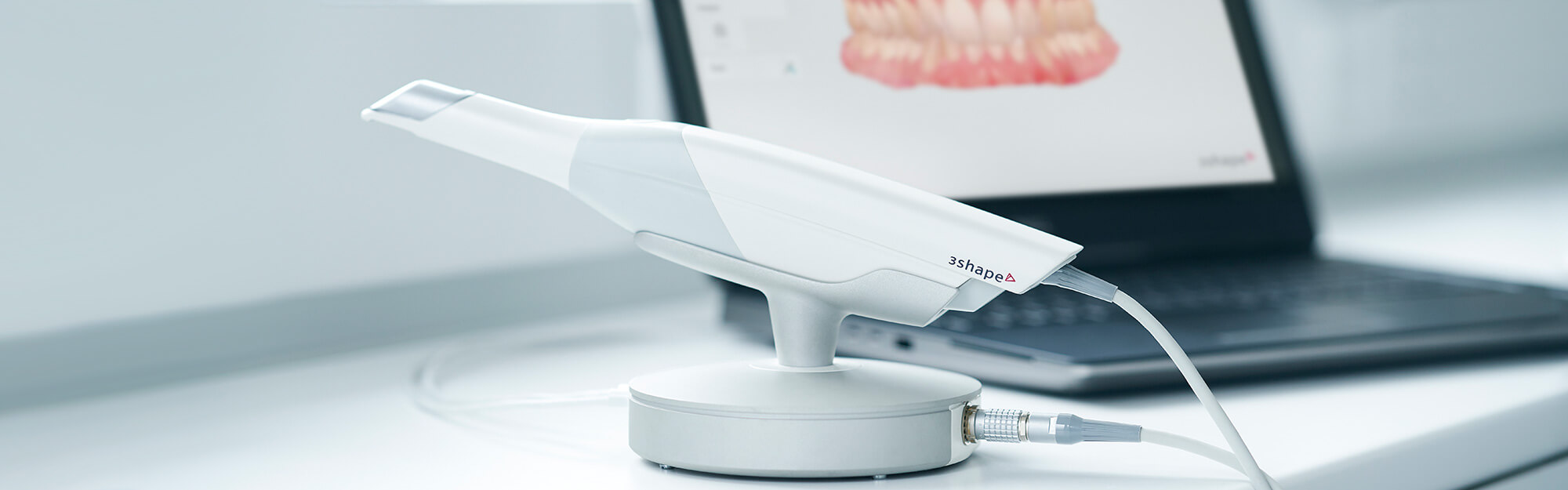
An intraoral scanner is a small handheld tool used to capture intra-oral impressions of your teeth without using conventional impression trays. Intraoral scanners project their light source to an object such as the teeth to create 3D renderings displayed in real-time on a chairside screen.

Dentists popularly use intraoral digital scanners to create impressions used to fabricate crowns, implant-supported crowns, veneers, bridges, Invisalign aligners, night guard, mouth guard, whitening trays and other prosthetics. Furthermore, we can use the 3D images generated by intraoral scanners to educate patients about their oral health, changes in their teeth by wear or progress of recession in their gums and treatment options.

Intraoral Scanner Stock Image-1
Intraoral Scanner Stock Image-2

Benefits of digital intraoral scanners

Traditional dental impressions have had their place over the years, but now it’s time to switch to something error-proof, comfortable, and fast.

Following are the many benefits of digital scanners.

  • Comfortable: Digital scanners improve the patient’s scanning experience because they don’t involve biting into messy, gooey material. Besides, digital scanners reduce the possibility of gag reflex
  • Fast results: Conventional impressions involved several remakes until the right impression was taken. Intraoral cameras generate impressions in real time, resulting in a short turnaround
  • Increased accuracy: Intraoral scanners use sophisticated technology to capture your teeth’s precise shape and contours—accurate scanning leads to perfect-fitting restorations and appropriate treatments
  • Enhanced patient education: With a high-resolution, magnified image of your oral cavity displayed on a screen, your dentist can effectively communicate the status of your oral health. This visual representation allows patients to clearly understand their dental condition, promoting increased engagement and commitment to the treatment plan
Intraoral Scanner Video - The Hope Dental Care Centre

Turn to The Hope Dental Care Centre for comfortable, accurate digital scanning

To experience digital scanning in Kanata, ON, please call (343) 803-6333 to talk to The Hope Dental Care Centre.

Intraoral Scanner Stock Image-3
Intraoral Scanner Stock Image-4

Intraoral Scanners FAQs

Can an intraoral scanner replace traditional dental impressions?

Intraoral scanners can often replace traditional putty impressions for procedures like crowns, bridges, veneers, and Invisalign. However, traditional impressions may still be needed for complex restorations or specific lab requirements. Your dentist will decide the best method for your treatment. Many patients prefer intraoral scanners as they are more comfortable, quicker, and avoid messy materials that may cause gagging.

Is an intraoral scanner safe to use?

Yes, intraoral scanners are completely safe. They use a harmless light source to capture digital images of your teeth and gums without radiation exposure. Unlike X-rays, they do not emit ionizing radiation, making them a safe option for all ages. The process is non-invasive and causes no discomfort, making it ideal for patients with sensitive teeth or a strong gag reflex.

How accurate are intraoral scanners compared to traditional impressions?

Intraoral scanners are highly accurate and often provide more precise digital impressions than traditional putty-based methods. Detailed 3D images allow dentists and labs to create better-fitting restorations with fewer errors. This accuracy reduces retakes, minimizing discomfort and saving time. Advances in technology continue to improve precision, making intraoral scanning the preferred choice for many procedures.

Can intraoral scanning be used for all dental procedures?

Intraoral scanners can be used for most dental procedures, including crowns, bridges, veneers, dentures, and orthodontic treatments like Invisalign. Some complex cases may still require traditional impressions, especially if deep or hard-to-reach areas are involved. Some dental labs may prefer conventional impressions for specific materials or workflows. Your dentist will determine the best approach based on your oral anatomy and treatment plan.

How long does an intraoral scanning procedure take?

The scanning process usually takes just a few minutes, depending on the complexity. A full-mouth scan typically takes two to five minutes, much faster than traditional impressions. Real-time digital images ensure accuracy before the scan is completed. If adjustments are needed, your dentist can instantly rescan areas without restarting, speeding up the process.

Do intraoral scanners help speed up treatment time?

Yes, intraoral scanners speed up treatment by eliminating physical materials and lab shipping time. Digital impressions can be sent instantly to the lab or used for in-office milling, sometimes allowing for same-day restorations. This reduces wait times for crowns, bridges, and aligners, helping patients’ complete treatment faster. Fewer errors lead to fewer adjustments and less time on follow-up appointments.

Can an intraoral scanner detect cavities or other dental issues?

While intraoral scanners primarily create digital impressions, some advanced models can assist in detecting cavities, cracks, and gum issues by capturing highly detailed images of the teeth and soft tissues. However, they are not a substitute for X-rays or other diagnostic tools. Dentists may still use digital or panoramic X-rays to check for decay between teeth, bone loss, or infections that are not visible through scanning alone. Combining intraoral scanning with other diagnostic tools helps ensure a comprehensive oral health evaluation.